








 CIJConnect Bot-enabled WhatsApp today at 4:00 PM.
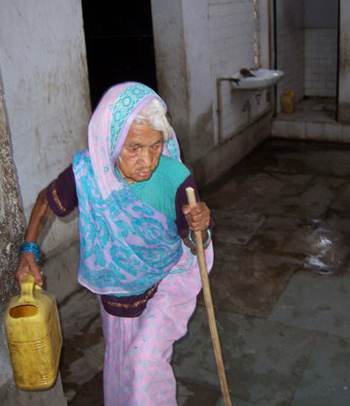
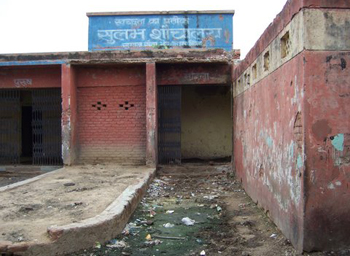 The idea of the paper on “Public Toilets in Delhi” came up rather vividly during my first few days with the Centre for Civil Society (CCS). I was on my way back home from CCS, travelling in a bus on the Yusuf Sarai road and was looking out of the window, when a Municipal Corporation of Delhi (MCD) public toilet caught my attention. It was one of those with old white tiles and it was divided into two equal sized cubicles and the width of the cubicles was just enough for a person to stand. I observed that the toilet was full of filthy and muddy water. A man was urinating just outside the toilet and there was an old, frail woman who looked like a beggar, desperately trying to clean the toilet. What an irony, I thought “She’s cleaning the toilet for men who can anyway use open space”. Further, I thought “She can’t even use this toilet. Where does she go when she wants to relieve herself?”
To probe answers to questions concerning public toilets for women in slum and resettlement colonies, players involved in this issue: Central Government officials, officials from the Municipal Corporation of Delhi (MCD), officials from Sulabh International, women from slum areas (Sanjay Colony, Kusumpur and Basti areas of Jhilmil Colony) and Jhuggi-Jhopri (JJ) resettlement colonies (Bawana, Savda Ghevra and Madanpur Khader) and the caretakers were interviewed. National policy documents on toilets for the urban poor and affidavits of senior officials from the MCD were also analysed.

On the basis of the findings, the key points that are of concern are – the norms for building toilets, public urinals for women, payment to use the toilets, cases of sexual harassment, awareness among women on how to use the toilet and the need for a lobby for this issue.
Norms
 At the national level, most documents and policy schemes note the norm for public toilets to be one latrine seat for 50 people. The City Development Plan, 2006, of Delhi states that the norm according to the Environmental Improvement Scheme of JJ clusters is one latrine seat for 20-25 people.
As per the interviews conducted with MCD officials, the ratios that were told to me were in the range of one latrine seat for 20 people to one latrine seat for 150 people.
The table gives the actual ratio of latrine seats to number of women in the slum and resettlement colonies visited during the research.
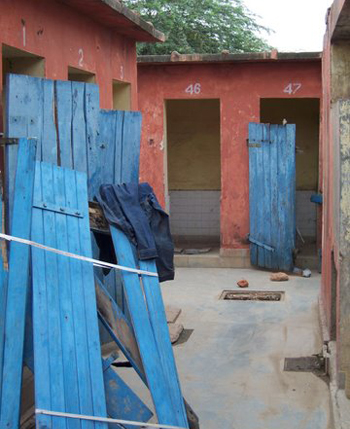
The ratios are very different from the norms suggested. Typically, out of the 20 latrine seats in a Women’s Block in a CTC (Community Toilet Complex), four are reserved for children; the ones for children are without a door. Due to this, the ratio is actually even more skewed in the case of women.
The MCD officials interviewed during the study believed that the latrine seats for children were mostly used by women. But, they probably do not understand that there is a clear difference between ‘going to the toilet’ in a closed cubicle and in one without a door.
It is suggested that the policy makers clearly define the norms for the number of latrine seats to users, the infrastructural requirements for CTCs and the placement of CTCs. The implementation agencies must follow these norms.
Toilet Facilities for Women
 There is a clear distinction between public urinals and CTCs, as CTCs provide facilities for bathing and washing clothes as well. The importance of CTCs in case of slum and resettlement colonies is very high as people do not have toilets in their houses. Even though, some people make a kind of cubicle inside or adjacent to their houses for having a bath; they do not have the money to build toilets at home, so the importance of public urinals for them increases.
According to an inspection carried out by a Delhi High Court Committee, out of 3192 urinals in Delhi, only 132 are for women; which is a mere 4%. Of the 12 zones of the MCD: Narela, Najafgarh, Rohini, Civil Lines, West and Karol Bagh zones did not have a single urinal for women.