








 CIJConnect Bot-enabled WhatsApp today at 4:00 PM.
Mosquitoes
 Mosquitoes bring disease and death. They create havoc by spreading malaria, cerebral malaria, brain fever, yellow fever, filariasis, dengue and chikungunya. In 2003, there were 1.86 million reported cases of malaria alone, out of which there were 1000 deaths.

Mosquito belongs to the fly family, with the mouth-parts modified into a piercing-sucking organ called the proboscis. Only the female of the species bites as she needs the blood-meal to complete development of her eggs. The males do not bite but live on plant nectar instead.
This biting behaviour is responsible for the spread of different diseases; when a mosquito bites an infected person, the protozoan, virus or bacteria travels to the mosquito’s body and this cycle is completed when the mosquito bites a healthy person, transmitting the disease.
 Mosquitoes require water to breed. Eggs are laid in water and the larvae complete their development, emerging as adults. Water sources may vary depending on the species, but all require stagnant water. With the onset of the monsoons, there is an abundance of free water and hence breeding sites.
Some major species of mosquitoes found in and around human habitation and their common breeding sites are:
Anopheles Spp. or the Malaria Mosquito breeds in stagnant collections of clean water such as ponds, lakes, overhead reservoirs, underground tanks, etc., in urban and rural areas. This mosquito is active after dusk and aptly called the ‘midnight-biter’.
Culex Spp. breeds prolifically in stagnant collections of polluted water such as drains, cess pools, gutters, septic tanks, etc., in urban surroundings. It is the common house mosquito and a major nuisance after dusk, biting heavily and causing sleepless nights.
Aedes Spp. the Yellow Fever or Asian Tiger Mosquito breeds in man-made collections of stagnant water such as water coolers, pots, old tyres, cans, empty bottles, flower vases, etc., in urban areas. This variety is a day biter causing a characteristic itchy red lump over the bitten area.
Armigeres Spp. a large mosquito and a vicious evening biter. It is not a major transmitter of any human disease, but its bite is very irritating and scratching the bitten area can lead to secondary infections. A day biter, with peak period of dawn and dusk, it attack a person in large numbers and even follows him if he moves away. A. subalbatus breeds profusely in septic tanks, entering through the vent pipes and laying eggs inside. Thanks to unplanned development and ill-constructed buildings, it has become a major nuisance pest in urban and rural areas.
While there is medical therapy for Malaria and Chikungunya, there is no known cure for Dengue. In the past few years, these diseases have been reported from many states in India and grabbed major headlines on TV and Newspapers.
Every responsible citizen should contribute in containing these diseases by simple measures that prevent breeding and multiplication of mosquitoes. These mosquitoes breed in clean stagnant water present in overhead tanks, discarded plastic containers, empty cans, old tyres, mud-pots, trays below refrigerators and in air-conditioning units, water coolers, flower vases, drain trays below potted plants, overhead tanks, empty coconut shells and open cisterns where rainwater may collect. Eggs laid are attached to wet surfaces of the container and can survive without water, hatching after a long dry spell. The best way to prevent breeding of mosquitoes is by keeping our surroundings free of discarded containers that could become a potential breeding site.
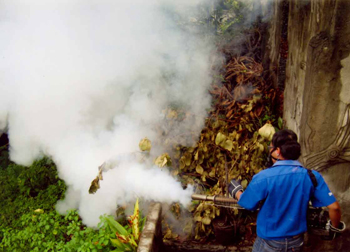
Other mosquito control measures such as anti-larval treatment and fogging against adult mosquitoes are also useful, but will have to be carried out by the Municipal Corporation or professional pest management companies.
Some Tips for combating mosquitoes
- Changing water every week in flower vases and drain trays of potted plants
- Covering overhead tank to prevent access to mosquitoes
- Preventing indoor or outdoor water stagnation even in smallest of containers
- Using mosquito nets at home
- Preventing mosquito entry by keeping doors closed and windows screened
- Using mosquito repellent on skin during day and night at mosquito infested sites
- Not storing water in open containers & covering all water containers with lids
- Scrubbing and cleaning margins of containers used for water,
- Ensuring regular cleaning of water tanks
- Storing old drums or barrels inverted to prevent water accumulation
- Ensure wearing of full sleeved and long legged clothes for protection against mosquito bites, especially at dusk.
Rodents
 The common rodents responsible for causing damage and spreading public health diseases are Bandicoot Rats. These are large rats belonging to the family Muridae and are found in India and South-East Asia. The Indian Mole-Rat or Lesser Bandicoot Rat (Bandicota bengalensis), prefers cultivated plains, gardens and pasture while the Bandicoot Rat or Large/Greater Bandicoot Rat (Bandicota indica) prefers human habitation.
The Indian Mole-Rat is the most important pest in both urban and rural areas in India. It is one of the most destructive pests to crops and cultivation; in addition to consuming or spoiling stored produce, it a very active burrower and is responsible for much structural damage to storage buildings as well. It is a very good swimmer, able to live in deep water rice fields, where it can cause much damage to the crop.
Burrows are usually made in paddy field embankments or “bunds” and also in areas where crops like tubers, vegetables, coconut and young rubber are cultivated. It is an aggressive animal and erects its long guard hairs scattered over the back, emitting harsh pig-like grunts when disturbed.
The Bandicoot Rat is a truly giant rat. The dark, greyish-brown adult grows to 30-40cms with an equally long tail. It looks similar to the Mole-Rat, but is much larger, weighing as much as 1.4kg! It is found in fields but usually occupies the outskirts of human dwellings such as compounds and gardens, commonly found rummaging near garbage bins. Its burrowing habits cause great damage to grounds, flooring and pavements as it can also tunnel through brick and masonry.
The characteristic large burrow gives away its presence. It is a totally non-fussy eater, equally comfortable feeding on household refuse, grain & vegetables and is a very serious pest in poultry farms. This large, aggressive animal erects guard hairs on its back and emits pig-like grunts when disturbed. If caged with others, it is likely to fight to death within a few hours.
 The commensal habits of these two make them serious pests in and around human habitation, crop cultivations and plantations, storehouses and poultry farms. These rats are known to inhabit houses in villages and are particularly aggressive when threatened; they are considered one of the chief reasons in restricting the spread of the Brown or Norway Rat (Rattus norwegicus) in India. Bandicoot rats are also known to kill infants, as a group of them can easily attack and devour a human child. There are also documented incidents of them attacking humans in hospital wards and corpses in morgues.
Bandicoot Rats act as carriers of several human and animal diseases such as Bubonic Plague, Murine typhus, Weil’s Disease, Leptospirosis, Salmonellosis and Rat-bite Fever (Leishmaniasis). Compounded by ignorance and low levels of civic hygiene, the recent outbreaks of the rat-borne diseases: Plague (Surat, 1996) and Leptospirosis (Mumbai, 2003-04), highlight the seriousness of the rat menace in today’s modern cities.
Rodent management tips
- Ensure garbage is collected and disposed in time
- Collect garbage in containers and these should have tight fitting lids
- Clean out and dry garbage containers regularly
- Doors closers should work properly and gaps around doors and windows should be sealed
- A proper rodent management programme should be in place; contact a reputed pest management company for the same.
As we can see, the control of pest-borne diseases is directly linked to control and management of the pest itself. Thus, large-scale public health pest control programmes are imperative and given the financial, manpower & other constraints of local municipal authorities, individuals themselves need to contribute by adhering to the basic tenets of hygiene and cleanliness. We cannot control the vagaries of nature, but we can enjoy the rains, through some basic hygiene & prevention tips and proper pest management programmes provided by reputed pest managers, to ensure pest-free and disease-free localities during the monsoon.
The author is a Pest Management professional, involved in the industry in various capacities for more than a decade